

The Role of Conveyor Systems in Smarter Fab Automation
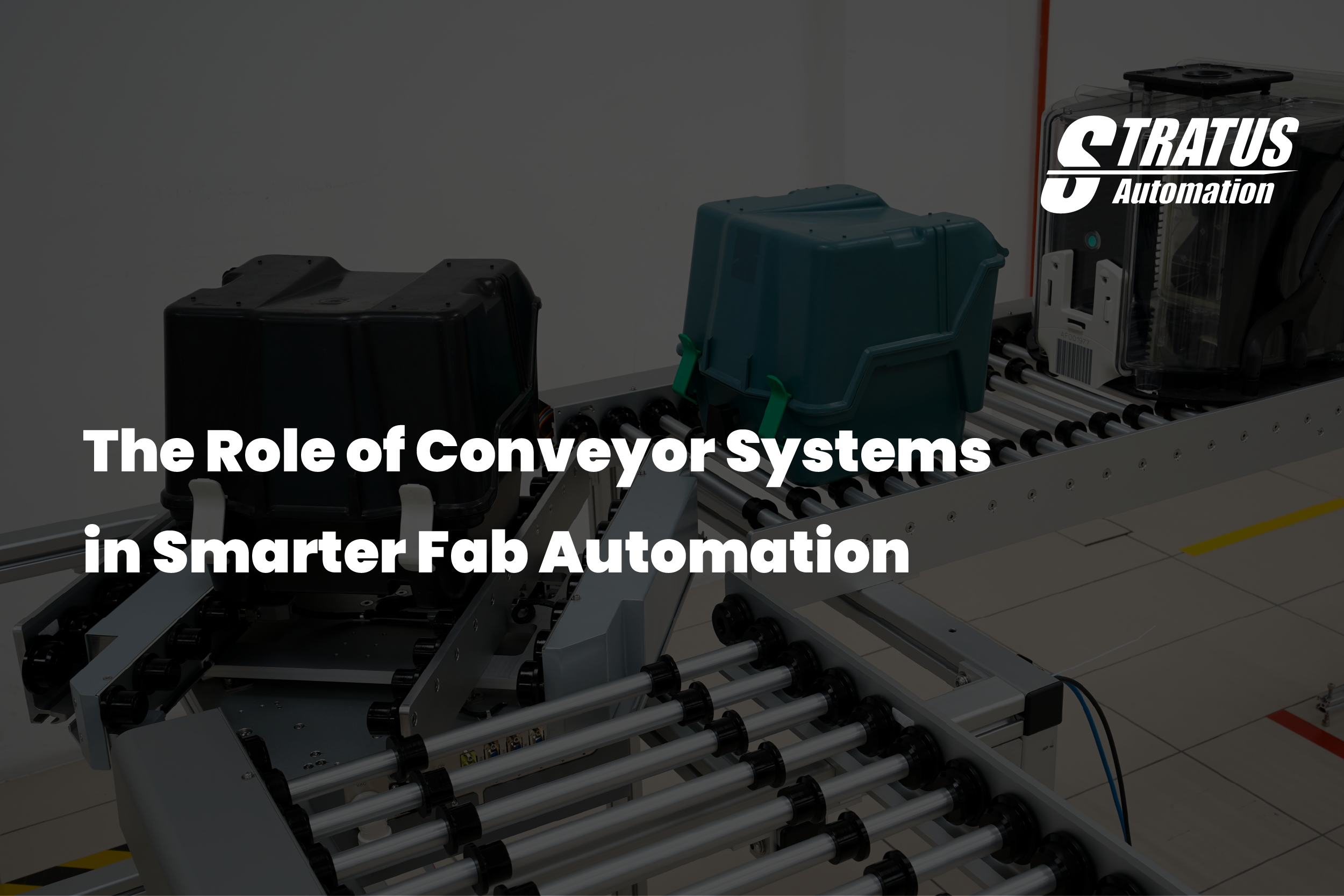
Welcome to the fourth edition of our newsletter. This edition focuses on conveyor systems and the critical role they continue to play in semiconductor fabs, particularly where stability, predictability, and cleanliness are key. Through close collaboration with our customers, we design conveyor solutions that align with fab roadmaps.
In conversations about fab automation, overhead systems often take center stage. But in many real-world production environments, conveyor systems continue to play a critical role in stabilizing material flow, especially where predictability, cleanliness, and cost efficiency matter most. At Stratus Automation, conveyors are engineered as a core component of a scalable, cleanroom ready AMHS strategy, designed to operate independently or work seamlessly alongside OHT and other automation modules.
Conveyor Systems Built the Stratus Way
Conveyor systems remain relevant because they are reliable, transparent, and highly controllable in the right applications. They provide the structural backbone that keeps material flow predictable and visible, especially in mature or space-constrained fabs.
Stratus conveyor solutions are designed to:
- Support consistent, high‑throughput transport, with documented performance of minimum 600 boxes per hour, depending on system configuration
- Operate in ultraclean environments, supporting cleanliness levels from Class 10 (ISO 4) down to Class 1 (ISO 3), with ISO 1 options available
- Rather than acting as a limitation, conveyors often serve as the structural backbone that keeps material flow visible, predictable, and stable
One of the key strengths of Stratus Automation’s conveyor systems lies in their modular and scalable design. Built with flexibility in mind, the architecture allows new modules to be added as fab capacity or layouts evolve, while a near zero maintenance design minimizes wear‑and‑tear, reducing downtime and long-term operating costs. Real-time tracking and continuous system health monitoring ensure full visibility, with all pods traceable throughout the process. Together, these capabilities make conveyor systems particularly well-suited for long transport distances, buffering zones, and applications where consistency and reliability take precedence over routing complexity.
Versatility is another key strength of conveyor-based automation. Stratus conveyor systems are designed to accommodate multiple carrier formats, including SMIF, FOUP, HA200, magazines, trays, and custom carriers- across both front‑end and back‑end semiconductor applications. This flexibility allows fabs to standardize material movement without locking themselves into a single carrier type or process flow.
Designed for Real World Fab Constraints
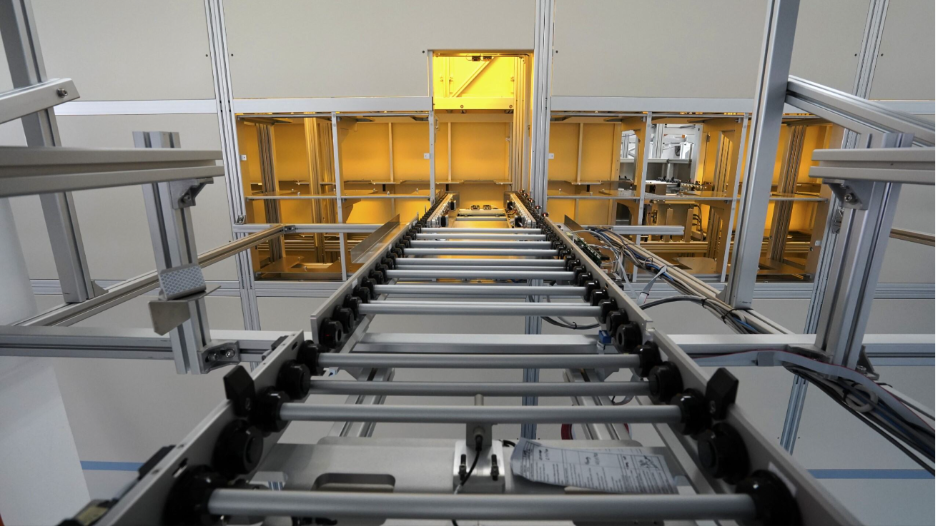
Conveyor systems may not always be the most visible part of fab automation, but their impact is tangible- in throughput stability, cleanliness control, and operational reliability. Conveyors are designed not as a compromise, but as a deliberate choice and are ready to work in tandem with broader AMHS systems.
At Stratus Automation, our conveyor solutions are engineered to perform as a dependable backbone within the broader material handling ecosystem. They are purpose‑built to support high‑throughput, continuous transport, with documented handling capabilities of minimum 600 boxes per hour, depending on system layout and configuration. In many cases, the smartest automation strategy isn’t about choosing one system over another but about deploying the right mix.
Access our latest 2026 brochure for detailed information and insights.